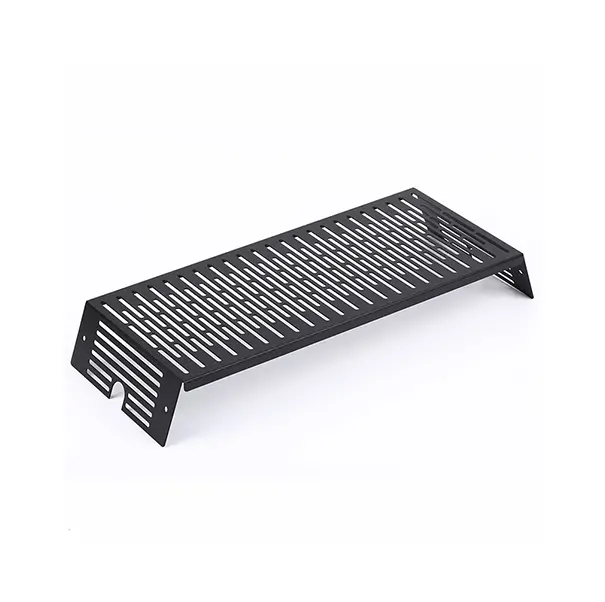
Custom Aluminum Stamping Parts
Stamped aluminum components produced to drawing.
Home › Metal Stamping
Stamping is one of the oldest crafts in this factory — the mould and stamping division dates to 1996 — producing aluminum and stainless parts, deep-drawn components and sheet metal fabrications.
| Division | Mould & stamping division (added 1996) |
|---|---|
| Materials in range | Aluminum (AL6061/6063 sheet), stainless steel |
| Evidenced products | Custom Aluminum Stamping Parts; Custom Stainless Steel Stamping Parts; Custom Stainless Steel Deep Drawing |
| Equipment | Stamping presses, CNC punching machines (factory equipment list) |
| Tooling | In-house mould design and production |
| Order policy | No fixed MOQ; small-batch trial production supported |
Stamped aluminum components produced to drawing.
Aluminum stampings supplied powder-coated in one route.
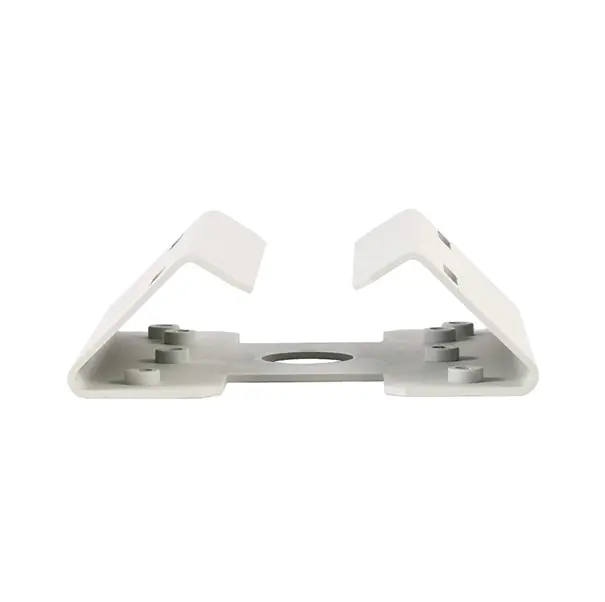
Stainless stampings for durable, corrosion-resistant applications.
Deep-drawn stainless components formed from sheet.
Sheet metal fabrication in the two grades named in the range.
Stamping economics are tooling economics, and this factory owns its tooling: the mould division that designs and builds stamping dies has been part of Runpeng since 1996, two years after founding and long before the die casting division existed. Die design, die maintenance and press work sit in one organisation, so a stamping programme's tooling is not a black box bought from outside — it is a house asset, maintained by the people who built it.
The range shows the division's spread: aluminum stamping parts (including powder-coated versions), stainless steel stamping parts, stainless deep drawing, and sheet metal fabrication in AL6061/6063. Presses and CNC punching machines from the equipment list cover the blanking, forming and punching operations that range requires.
For flat and formed sheet parts in repeat quantities, stamping usually wins on unit cost: the press produces in seconds what a machine cuts in minutes. For thick sections, tight three-dimensional detail or very low volumes, machining or casting can be the better route. A single-process stamper has an incentive to stamp everything; this factory does not — the same review that quotes your stamping can price the machined or cast alternative from its sister divisions, and the comparison is on the table before tooling is committed.
Deep drawing is the clearest example: a drawn stainless shell replaces what would otherwise be a machined-from-solid part at a fraction of the material. When a drawing can be drawn, we will say so.
Send the drawing and expected quantities. Stamping quotes separate tooling from unit price, because the die is a long-life asset whose cost amortises across the programme — the honest comparison between suppliers is tooling plus unit price at your real volume. Trial production is supported under the factory's no-fixed-MOQ policy, so a programme can start with a proving batch before the production die decision is finalised.
Stamping programmes stay healthy on two habits. First, respect the die as the programme's centre of gravity: it is designed and built by the in-house mould division, held for the programme's life, and maintained by its builders — so tell the review honestly about expected lifetime volumes, because die decisions made for year one quantities can be wrong for year five. Second, freeze feature placement early: holes, forms and patterns are steel once the die is cut, and the cheapest design change in stamping is always the one made before that.
Buyers transferring an existing part should say so at enquiry. A part with an existing die, a part needing a new die, and a part being re-specified from a sample are three different projects with three different first steps, and the review will name which one you have before quoting anything.
Tell us the material grade, quantity and finish you need for your metal stamping parts. Our engineers review every drawing for die casting, machining or stamping feasibility before quoting — no obligation.
Send Drawings for a DFM Review